
Bamboo Farming in Kenya: Sustainable farming techniques for a Greener Future
- Robert Sunya

- Sep 29
- 3 min read
Hello, my name is Robert Sunya, and I’m the in-house bamboo expert at We Do Bamboo. Every day, I witness how bamboo is transforming Kenya; restoring land, creating income for farmers, and driving eco-friendly construction. In this article, I’ll share how bamboo farming in Kenya can be done sustainably and why it matters for communities, industries, and the environment.

Why Bamboo Farming Matters in Kenya
Kenya’s climate and soil conditions are well suited for bamboo. Unlike timber trees that take 20–50 years to mature, bamboo can be harvested in just 4–5 years for industrial application. This makes it an attractive, renewable alternative for both smallholder farmers and commercial projects.
Bamboo also restores degraded land. Its deep roots prevent erosion, improve water retention, and increase soil fertility. With Kenya facing challenges like deforestation and climate change, bamboo is emerging as a powerful solution.
Farmers are already adopting practices such as:
Choosing species like Asper, Giganteus and Bambusa vulgaris.
Preparing land with proper drainage and organic compost.
Using mulching and spacing for healthier, faster growth.
Sustainable Bamboo Farming Techniques
Sustainable bamboo farming techniques balances productivity with care for the environment and local communities. The most effective techniques include:
Sustainable management; weed and remove weak culms to increase yield annually
Selective harvesting; cut only mature culms while protecting young shoots.
Natural pest control; use neem, compost, and beneficial insects instead of chemicals.
Water-smart irrigation; rainwater harvesting and drip systems reduce waste.
Community involvement; train and empower farmers, provide seedlings, and build fair market access.
Biodiversity protection; intercropping bamboo with leguminous crops to support soil and ecosystems.
These methods ensure bamboo farming in Kenya thrives without degrading the land or harming livelihoods.
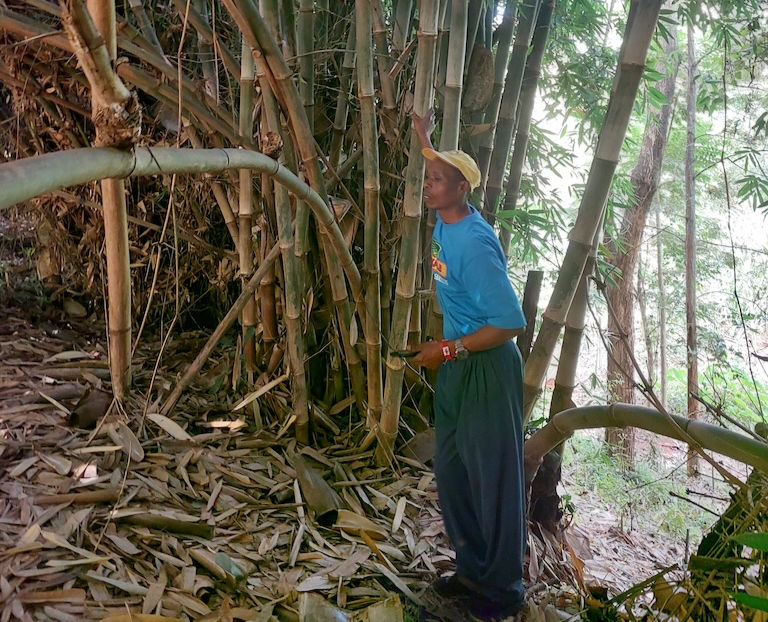
Is Bamboo the Most Sustainable Building Material?
Bamboo is often described as one of the world’s most sustainable materials, and for good reasons:
Rapid growth: up to 90 cm per day under favorable weather condition and species-wise, harvestable within 3–5 years.
Carbon storage: absorbs up to 12 tonnes of CO₂ per hectare annually.
Strength: tensile strength comparable to steel, compression resistance better than concrete.
Low inputs: needs little fertilizer and consumes less energy in processing than timber.
Still, sustainability depends on responsible management. Unsustainable harvesting can undo these benefits, which is why at We Do Bamboo, we emphasize traceable sourcing and farmer partnerships.
Bamboo in Construction and Design in Kenya
Bamboo is increasingly used in construction and design across Kenya. Builders and architects appreciate its strength, flexibility, and aesthetics.
Practical applications include:
Structural frameworks: poles for houses, schools, and community buildings.
BPC products: decking, cladding, and wall panels made from bamboo powder and recycled plastic.
Furniture: lightweight and durable alternatives to hardwood.
Landscaping: fencing, hedges, and decorative features.
Eco-tourism: bamboo lodges and resorts blending sustainability with style.
At We Do Bamboo, we don’t just manufacture BPC products. We also supply raw bamboo materials — chips, powder, and treated poles — to industries in Kenya and abroad.
The Future of Bamboo in Kenya
Bamboo can restore degraded land, reduce reliance on unsustainable timber, and empower farmers. But to unlock its full potential, collaboration is needed among farmers, builders, policymakers, and manufacturers.
At We Do Bamboo, our mission is clear: to make bamboo a cornerstone of Kenya’s sustainable future. With the right farming practices and industrial innovation, we can turn this fast-growing plant into a real driver of climate action and economic growth. Are you looking for sustainable bamboo materials in Kenya? From BPC decking and cladding to bamboo chips and powder, we’ve got you covered. Request a quote or visit our Nairobi factory to see how bamboo can power your next project.


