
The Essential Guide to Sourcing Bamboo Materials for Construction and Industrial Use

Updated: Sep 2
Understanding Material Requirements
The first question is not simply: “Do we need bamboo?” It is: “At what stage of processing do we need the bamboo?”
Bamboo Poles
Full or treated bamboo poles are generally suited to construction, architectural applications, landscaping, furniture, and further mechanical processing.

Important specifications include:
Bamboo species
Pole length
Diameter
Wall thickness
Straightness
Treatment requirements
Moisture content
Bamboo Slats and Split Bamboo
Slats and split bamboo are useful when the first processing step has already been defined. They may be used for laminated products, furniture components, panels, weaving, architectural finishes, or further industrial conversion.

Buyers should specify the required width, thickness, length, tolerances, and surface preparation.
Bamboo Chips
Bamboo chips can be used as upstream feedstock for pulp, fiber extraction, biochar, gasification, bioenergy, and engineered materials.
For consistent industrial processing, buyers should consider:
Chip dimensions
Moisture level
Species
Bark or node content
Contamination limits
Required annual volume
Bamboo Powder
Bamboo powder, sometimes called bamboo flour, is a finer industrial input used in composites, molded products, plastics, panels, and other bio-based material systems.
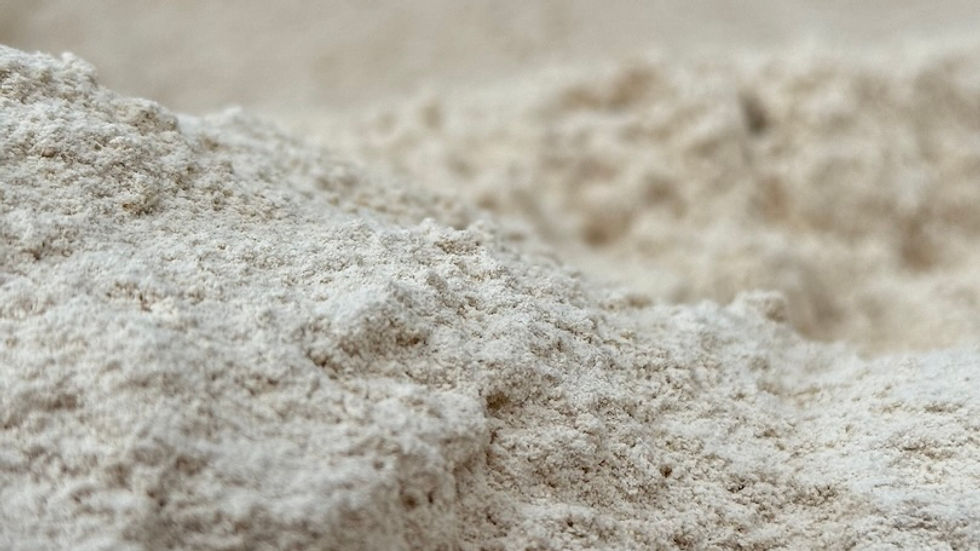
Key specifications may include:
Particle or mesh size
Moisture content
Ash content
Bulk density
Colour
Consistency between batches
The correct specification depends on the customer’s production process and intended end product.
The Importance of Moisture Content
Moisture is one of the most critical variables in bamboo processing. Excess moisture can affect storage stability, compounding, bonding, molding, and transport. Different applications require different moisture levels, so the target should be agreed upon before production.
For export shipments, moisture control is also vital for reducing the risk of microbial growth or deterioration during transport. Industrial buyers should therefore request information about drying, testing, and storage procedures.
Consistency Over Perfection
A small sample can perform well in a laboratory, but industrial production requires repeatability. Before moving to commercial volumes, buyers should establish acceptable ranges for:
Particle size
Dimensions
Moisture
Cleanliness
Colour
Species composition
Batch-to-batch variation
The objective is not always to eliminate every natural variation. It is to ensure that the variation remains within a range the production process can handle.
Matching Bamboo Species to Application
Bamboo is not one uniform material. Different species have different diameters, wall thicknesses, densities, fiber characteristics, and processing behavior.
For poles and slats, species selection can influence strength, appearance, and machinability. For chips and powder, the effect may be seen in fiber content, colour, ash level, or downstream performance.
The supplier and buyer should discuss whether a specific species is required or whether a controlled mixture is acceptable.
Defining Packaging and Logistics Early
Packaging is often treated as a final detail, but it can affect cost, moisture stability, and handling at the destination. Depending on the material, bamboo may be supplied as:
Bundled poles
Stacked or strapped slats
Bulk bags
Lined bags
Containerized loose material
Customer-specific export packaging
Industrial buyers should consider unloading equipment, warehouse conditions, batch identification, and the quantity required per delivery. For international supply, export documentation and Certificates of Analysis may also be required.
Planning for Scale
Many manufacturers begin with samples or pilot quantities. This is a sensible first step, particularly when bamboo is being introduced into an existing polymer, composite, panel, or energy-production process.
However, it is useful to discuss scale from the start:
What quantity is needed for laboratory testing?
What quantity is needed for a production trial?
What would annual commercial demand look like?
Can the same specification be maintained at larger volumes?
How frequently will deliveries be required?
A successful trial only creates value when the supply chain can support the next stage.
Looking Beyond Material Price
The cheapest raw material is not always the lowest-cost material to process. Inconsistent dimensions, excess moisture, contamination, or unsuitable packaging can create additional drying, screening, handling, and rejection costs.
Industrial buyers should therefore compare the complete supply proposition:
Material specification
Consistency
Processing performed before delivery
Quality documentation
Traceability
Packaging
Logistics
Supply continuity
Supplying Bamboo Raw Materials from Kenya
We Do Bamboo supplies bamboo in different stages of processing, including:
Full and treated bamboo poles
Split bamboo and slats
Bamboo chips
Bamboo powder

Our materials are sourced and processed in Kenya and can be prepared for construction, further manufacturing, composite development, bioenergy, and other industrial applications. Specifications can be discussed according to the customer’s process, trial requirements, and commercial volumes.
Our aim is not simply to supply bamboo, but to provide it in the form the customer’s project or production process requires.
Looking for bamboo raw materials for construction or industrial processing?
Explore our range of raw bamboo materials or contact our team to discuss specifications, samples, volumes, and pricing.
WhatsApp: +254 720 008833
In conclusion, sourcing bamboo materials for industrial use requires careful consideration of various factors. By understanding the specific needs of your project and engaging in open communication with suppliers, you can ensure a successful partnership. I invite you to reflect on how bamboo can enhance your projects and contribute to sustainable construction practices in Kenya and East Africa.


